For couples having the same conversation over and over
Couples Counseling in Chandler, AZ
You still love each other. That is not what is broken. What is broken is that every conversation about the thing that actually matters ends in a fight or ends in silence, and you have both quietly stopped expecting anything else.
That is a pattern, not a verdict. Patterns can be changed, and we will show you how.
One conversation. 30 minutes. You will know if it is a fit.
What's on this page
- Signs you need more than another talk about it
- What couples say
- We coach couples, we are not therapists
- What the 12-Week Couples Reset covers
- What if your partner is hesitant?
- When couples counseling isn't the right next step
- What it costs
- Where we meet in Chandler
- Who you'll be working with
- Frequently asked questions
Signs You Need More Than Another Talk About It
Most couples do not call us after one bad fight. They call after a couple of years of the same fight.
What usually happens first is that you stop bringing things up. Not because you resolved anything, but because raising it costs more than living with it. That feels like peace for a while. It is not peace. It is a pile.
What we hear most often
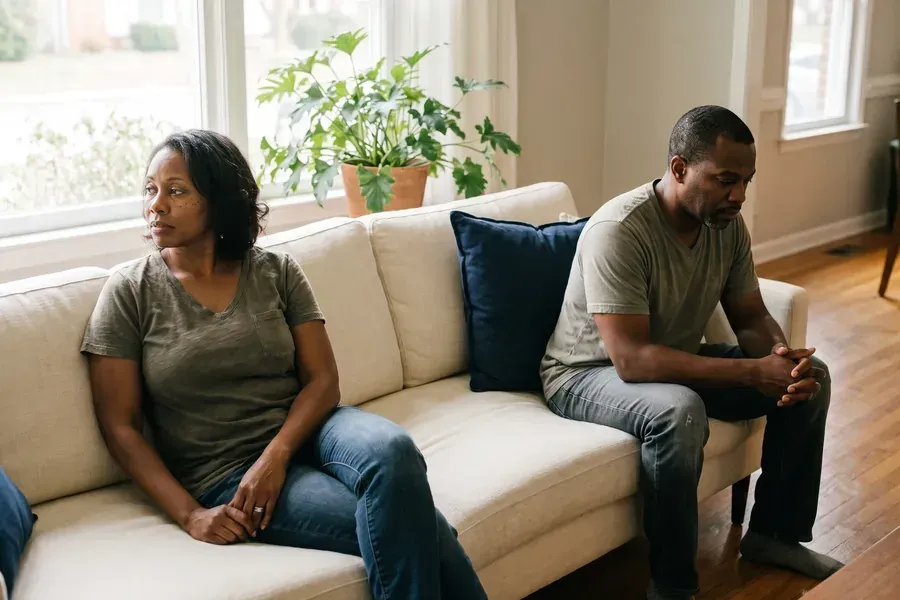
- The same argument comes back every few weeks wearing different clothes.
- One of you shuts down and the other pushes harder, and neither of you means to.
- You feel more like roommates than teammates.
- You have started keeping score without meaning to.
- Something happened, trust took a hit, and you have never really finished the conversation about it.
- Nothing is on fire. You are just further apart than you used to be, and you cannot name the day it started.
None of that means you picked the wrong person. It usually means nobody ever taught either of you how to do this part. Most of us learned communication by watching our parents, and most of us are still running that software without ever reading the manual. If trust is part of what needs repair, rebuilding trust for couples is its own piece of the work and we go into it there.
You do not have to hit a crisis to earn help. There's always, always hope, and it is a lot easier to build from a drift than from a wreck.
What Couples Say
We Coach Couples. We Are Not Therapists.
Here is the honest answer before you spend money. Hope Relentless does couples coaching, not therapy. Sarah-Gayle holds a Master of Arts in Clinical Psychology with an emphasis in Marriage and Family Therapy, and she works here as a coach, not a clinician. I am an ordained minister. We are not licensed therapists, we do not diagnose, and we do not treat mental health conditions.
What that means in practice is that we are teachers. We hand you tools, we watch you use them on your own real issues, and we correct you in the moment. If you want someone to sit with you while you process for a year, we are not that. If you want to leave knowing how to talk to each other, that is exactly what we do.
This is a fit if
- You feel more like roommates than teammates and want a way back, which is what emotional intimacy for couples is about
- Your conversations keep going sideways and you want a process, not a referee
- You are dating, engaged, or married and want to build this before you need it
- You want practical tools you can keep using, not open-ended talking
Something else comes first if
- There is violence, intimidation, or fear for safety in the home
- Addiction is active and untreated
- A mental health condition needs clinical care first
- One partner is unwilling to participate at all
We work with couples only. Every session has both partners in the room, every single time. We do not do individual sessions, and we do not offer therapy or trauma treatment. That is not a gap we are working on filling. It is a boundary we hold on purpose, because the work only holds when you both learn it together.
What the 12-Week Couples Reset Covers
Twelve sessions, 55 minutes each, one a week. Same time, same rhythm, so it becomes something you build around instead of something you squeeze in.
The order matters. We do not hand you a communication tool on day one, because a tool used with the wrong heart becomes a weapon. So we build the ground first, then the tools, then we let you swing at the real thing. Every couple moves at their own pace, so what follows is the arc, not a script.
Early on, you each see your own part
You both complete the assessment before we start, so the first session opens on real information instead of history-gathering. From there the work is about the patterns each of you personally brings, not the ones you have been cataloguing about your partner. Underneath that sit the mindsets: personal responsibility, same team, and the simple math that every interaction is either a deposit or a withdrawal in the account between you.
The shift: the conversation stops being a trial. When you are both working on your own side of the street, there is nobody left to prosecute. Most couples feel that one early, and it is usually the first time in a long while that a hard topic does not end with somebody defending themselves.
Then you learn the Loop and use it on real things
The Communication Loop is our four step process for having a hard conversation without it turning into a fight: a Proactive Start, a Validating Response, a Solution-Based Agreement, and then Discuss the Details. We do not march through one step per session like a curriculum. We teach it, then you bring in whatever actually came up that week and we coach you through it in the room, over and over, until the steps stop feeling like steps.
The shift: the first time your partner reflects back what you said and gets it right, something lands. Couples tell us that is the moment they realize how long it has been since they felt heard, and that being heard was available the whole time.

By the end, you can do it without us
Repair for when you blow it, because you will, which is the same conflict resolution for couples work we teach on its own. The Game Plan for setting a hard conversation up before you have it: the goal, the timing, one topic at a time. And the connection work, rebuilding the closeness that months of conflict have been crowding out.
The shift: you still argue. Every couple does, and healthy ones are not the exception. What changes is that you come back together in an hour instead of three days, and neither of you has to wait for the other to go first. That is the point where couples stop needing us, which is the whole goal.
What comes with it
Every week
- A 55-minute session with both of you present
- A date night and connection questions to use between sessions
- Text message encouragement so the work does not go quiet
In your hands
- The Hope Relentless notebook, so you keep the frameworks
- Our relationship assessment at the start, to see where you actually stand
- Tools you own afterward, not a dependency on us
However you meet
- In person at our Chandler office
- Or online, with the same material and the same rhythm
- Scheduling built around your week, not ours
Twelve weeks is not arbitrary. It is long enough for a new way of talking to survive contact with a bad Tuesday, and short enough that you can see the end from the beginning.
How this starts
Schedule a consultation
A 30-minute conversation, no cost and no obligation. We ask what has been going on, you ask us anything you want.
We tell you honestly what fits
If the twelve weeks is right, we set your weekly time. If something else would serve you better, we say so.
You start with the assessment
Both of you complete it before session one, so week one opens on real information instead of history-gathering.
Or call (623) 343-4764 if you would rather talk to a person first.
What If Your Partner Is Hesitant?
This is the most common reason a couple never books, and it is worth saying out loud rather than pretending it does not happen.
Hesitant is not the same as unwilling. Most people who drag their feet are not against the relationship. They are against walking into a room where a stranger and their partner sit on one side of the table and they sit on the other, and they spend an hour hearing everything they do wrong. That fear is reasonable. It is also not what this is.
Nothing gets said about you that is not said in front of you. There are no private calls, no side conversations, and no coach quietly forming an opinion about which of you is the problem. Both of you are in the room the whole time, and you both leave with the same tools and the same homework.
If your partner is hesitant but willing, the consultation is a low-stakes place to start. It is 30 minutes, it costs nothing, and nobody signs anything. A lot of reluctant partners come to that call braced for a sales pitch and leave surprised that we spent most of it listening.
If your partner is genuinely unwilling to be in the room, I will be straight with you: this is not the right time, and we do not have a version of this you can do alone. Every service we offer has both partners present. That is a real limit, and I would rather name it than take your money and disappoint you.
When Couples Counseling Isn't the Right Next Step
Not every hard season belongs in a coaching room, and you deserve to hear that before you book rather than after.
If there is violence, intimidation, or fear for anyone's safety in your home, joint sessions are not the right starting point and can make things less safe. That situation needs help built for it. The National Domestic Violence Hotline has guidance written specifically about couples counseling and abuse, and it is worth reading before you decide anything. If someone is in crisis or thinking about self-harm, call or text 988 for the Suicide and Crisis Lifeline.
- There is violence, coercive control, or fear for safety in the home right now.
- Addiction is active and untreated. Sessions built on honesty rarely hold when someone is impaired.
- A mental health condition needs clinical evaluation and care first. We are coaches, not clinicians.
- One partner is completely unwilling to participate.
- Something urgent is unfolding and you need more support than a weekly hour.
On the other end, some couples reach out after one rough week. If you had a hard argument, talked it through in a day or two, and you are still turning toward each other, you may not need a twelve week program yet. A rough patch has a clear beginning and end. A pattern does not.
If you are not sure which one you are in, that is a normal question and it is exactly what the consultation is for. We would rather tell you honestly that you are fine than sell you something you do not need.
What It Costs
Not because we are hiding it. Because the right number depends on which format fits you.
Couples coaching in the East Valley is generally priced one of two ways: per session, or as a program with a set start and finish. We use the program model, because a set number of sessions with a defined arc is what makes the change stick. An open-ended meter running week after week does not create urgency, it creates a habit of talking about the problem.
Schedule a ConsultationWhat actually moves the number is the format and how many coaches are in the room. A private program costs more than a group workshop, because the time is yours. Most couples work with one coach, and that is the standard price. Adding the second coach costs more, because you get a husband and wife team and each of us catches what the other misses.
Before you book with anyone, ask these five questions
- Is this coaching or therapy, and what does that difference mean for us?
- Are both of us in the room for every session?
- How many sessions is this, and how do we know when we are done?
- What do we actually walk away with, and can we use it without you?
- Is there a free consultation before we commit to anything?
Ask us those too. Anyone worth your money has a clean answer to all five.
Where We Meet in Chandler

Weekly sessions are held at our Chandler office:
Hope Relentless Marriage & Relationship Center
3075 W Ray Rd #200
Chandler, AZ 85226
(623) 343-4764
Get directions
It is a private room with a door that closes and enough quiet that you can say the hard thing out loud without wondering who can hear it. Parking is free and steps from the entrance. We are just off Ray Road near the 101, which puts us within a short drive of anywhere in Chandler and the surrounding East Valley.
Online works just as well here, and we mean that. Twelve weeks of driving is a real ask, and plenty of couples do the whole program by video without losing anything. Some do a mix, meeting in person when the topic is heavy and online when the week is full. Whatever keeps you showing up is the right choice.
Who You'll Be Working With
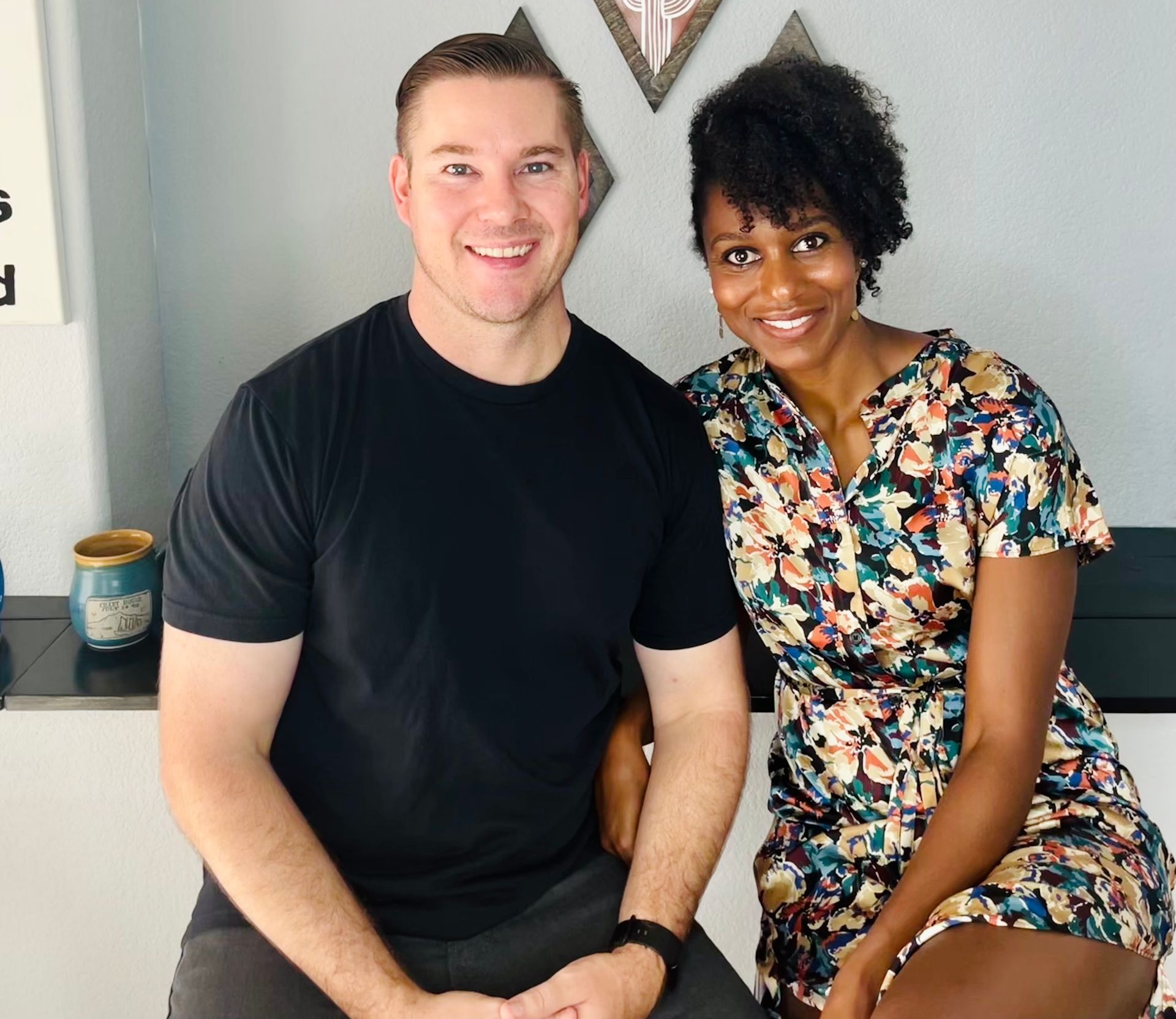
Most couples work with one of us, either Chad or Sarah-Gayle. You get the same coach every week, so you are never re-explaining your story to somebody new. Which of us it is comes down to fit and availability, and we sort that out on the consultation.
Working with both of us together is an option, not the standard. A husband and wife team coaching a couple is worth it for some couples and unnecessary for most. We will tell you honestly which camp you are in.
Chad Galbreath
Ordained Minister
I spent about ten years as an executive pastor before Sarah-Gayle and I built Hope Relentless. I used to fight to be right. My wife jokes that I should have been an attorney. I would win the argument and lose the connection every time. The shift was not a better comeback. It was realizing we were on the same team.
Sarah-Gayle Galbreath
M.A. in Clinical Psychology, Marriage and Family Therapy
Sarah-Gayle brings the training and the practitioner's ear. She hears what is underneath what a couple is saying, and she is the reason our frameworks are as practical as they are. Couples consistently tell her the assessment debrief was the first time in years they both felt understood at once.
Hope Relentless is a coaching practice, not a clinical one. We are coaches, not licensed therapists, and we do not provide therapy, diagnosis, or treatment. If your situation calls for licensed clinical care, we will tell you and help you find it.
Frequently Asked Questions
Is this counseling or coaching?
Coaching. Sarah-Gayle holds a Master of Arts in Clinical Psychology with an emphasis in Marriage and Family Therapy and works here as a coach rather than a clinician, and Chad is an ordained minister. We are not licensed therapists, we do not diagnose, and we do not treat mental health conditions. What we do is teach you a communication process, watch you use it on your own real issues, and correct you in the moment so you can do it without us.
How long is the program and how often do we meet?
Twelve sessions, 55 minutes each, once a week. Same time each week so it becomes something you build your schedule around instead of something you squeeze in. You can meet at our Chandler office, online, or a mix of both.
Do we ever meet with you separately?
No. Both partners are in the room for every session. We work with couples only, and we do not offer individual sessions. Nothing gets said about you that is not said in front of you, which is a large part of why couples feel safe enough to be honest here.
What does couples counseling cost in Chandler?
We talk through the number on the consultation, because the right one depends on which format fits you. Most couples work with one coach, either Chad or Sarah-Gayle, and that is the standard. Working with both of us together is an option that costs more. What we can tell you here is that we price it as a program with a set start and finish rather than an open-ended per-session meter, and that the consultation is free with no obligation.
What if my partner is hesitant about counseling?
Hesitant is not the same as unwilling, and it is very common. Most reluctant partners are not against the relationship, they are worried about walking into a setup where they get told everything they are doing wrong. That is not what this is, and both of you leave every session with the same tools and the same homework. Bring the hesitation to the consultation and we will talk it through. If a partner is genuinely unwilling to be in the room, this is not the right time, because every service we offer has both partners present.
Do you work with dating and engaged couples, or only married couples?
All three. The material works the same whether you are dating, engaged, or twenty years in, because the patterns underneath a hard conversation do not change much. Couples preparing for a wedding often get the most out of it, since they are learning the process before the stakes get high.
Do we have to be Christian to work with you?
No. We are Christians and that shapes how we see commitment, but the tools we teach are practical and they work for anyone. Plenty of the couples we coach do not share our faith, and the program does not change for them. You set how much of the spiritual side is in the room, including none of it. If you do want faith at the center of the work, we offer that too, and we would point you toward our Christian marriage counseling in Chandler instead.
What is the difference between this and a marriage intensive?
Your calendar, mostly, not the severity of your situation. This program spreads the same ground across twelve weeks and builds the habit through repetition. A two-day marriage intensive compresses it into one concentrated block with both of us in the room, for couples whose schedule will not hold twelve weeks of appointments. We will tell you honestly on the consultation which one we would put you in.
We think this is right for us. What is the next step?
Schedule a consultation. It is a 30-minute conversation, no cost and no obligation. We ask what has been going on, you ask us anything you want, and we tell you honestly whether the twelve weeks is the right fit or whether something else would serve you better. If it is a fit, we set your weekly time and send the assessment to complete before session one. You can book online any time, or call us at (623) 343-4764 if you would rather talk to a person first.
Cheering you on,
Chad & Sarah-Gayle
There's always, always hope.