
How to Overcome Resentment in Your Marriage

Resentment rarely walks in through the front door. It slips in through the cracks. An expectation that never got voiced. A conversation that went sideways and never got resolved. A promise that kept getting broken. Over time, those cracks add up, and what started as hurt slowly hardens into something that quietly poisons everything.
Chad and Sarah-Gayle Galbreath sat down on the Hope Relentless Podcast to talk about resentment, where it comes from, what it actually costs, and how to get rid of it. If you or your spouse have felt that distance, that coldness, that low-grade bitterness you can not quite name, this is for you.
Prefer to watch? Here is the full episode.
This blog pulls from the Hope Relentless Podcast episode on resentment. Chad and Sarah-Gayle go deeper on each of these points, including personal stories and practical examples. Listen wherever you get your podcasts.
Key Takeaways
- Resentment builds slowly through unspoken expectations, poor communication, pride, and repeated lack of follow-through.
- Harboring resentment warps your perspective. You lock your spouse in an old version of themselves and miss their growth entirely.
- Resentment pulls you into withholding, indifference, and coldness. Scripture calls those patterns sinful and they pull you out of alignment with God.
- Overcoming resentment is an inside game. It starts with personal ownership, not waiting for your spouse to change first.
- The five steps are: rely on God, walk in humility, choose forgiveness, assume the best, and seek individual counseling.
- Forgiveness is not contingent on what your spouse deserves. It is the standard Christ set and the foundation of a healthy marriage.
- God has more for your marriage than resentment. You do not have to carry it.
Where Resentment Starts
Before you can address resentment, you need to see how it got in. Four entry points show up in marriages consistently.
Unspoken expectations.
Chad put it plainly in the episode:
"Unhealthy expectations are the breeding ground of resentment. I mean the things that I have not shared, but I am still then withdrawing or withholding from Sarah-Gayle, or things where I am disappointed and hurt, and we have never even talked about those."
Expectations are not inherently bad. When they are communicated and agreed upon, they become shared values and vision. The dangerous ones are the silent ones. The standards you hold your spouse to without ever telling them.
Poor communication. Sarah-Gayle hears this from couples constantly. Many will not bring something up because they do not want to hurt their spouse's feelings. As she put it in the episode, that just tells her they do not know how. Communication is a learnable skill, and so is learning what to do when there is disagreement. Most couples never get that skill, and unresolved tension becomes the breeding ground for bitterness.
Pride.
When pride is running the show, admitting a mistake feels like losing. Chad referenced Philippians 2:3 in this context: "Do nothing out of selfish ambition or vain conceit, but in humility, consider others better than yourself." Pride shuts down ownership. No ownership means no repair. No repair means resentment takes root.
Lack of follow-through.
When the same argument cycles back again and again with nothing changing, a hardness forms in the heart. Sarah-Gayle noted that it is often not even intentional. It is a failure to get into the details of what change actually looks like and who is accountable for making sure it happens.
Resentment often takes root when trust has been broken and never properly repaired.
Left unaddressed, resentment leaves many spouses quietly wondering whether to stay or go.

Not sure where your marriage stands?
Take our free marriage and communication assessment. In a few minutes you will see your strengths and the one area to focus on first.
Take the Free AssessmentWhat Resentment Costs
Couples often minimize resentment. They treat it like a minor inconvenience, something to manage rather than something to eliminate. Chad pushed back on that framing:
"Resentment is incredibly expensive. If I'm harboring resentment, then likely I put my spouse in a box. And so now even as she is growing and moving towards me, I don't see it because resentment shakes my perspective to notice what is still missing."
That is one of the more destructive things resentment does. It locks your spouse in a version of who they used to be. They can grow, change, and move toward you, and you will not see it because resentment keeps your eyes fixed on the gap.
The second cost is obedience to Christ. Sarah-Gayle addressed this directly. When you harbor resentment, you start withholding, going cold, being short, and being indifferent. Scripture calls all of that sinful. It pulls you out of alignment with what God has called you to in your marriage. As she said on the podcast:
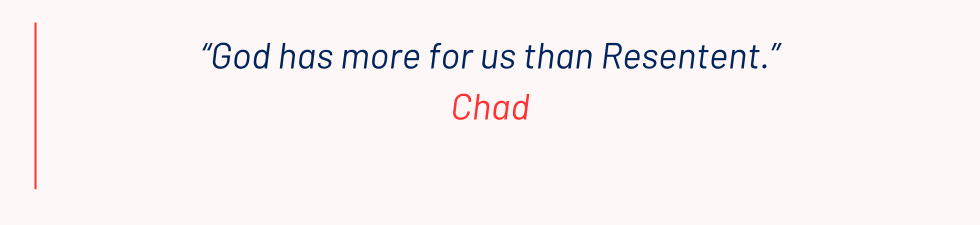
"Resentment is something that destroys; it steals from our marriage. And we don't have to exist with it present. God has so much more for us than to hold onto resentment."
God does not ask you to manage resentment. He asks you to eradicate it.

The Inside Game: Five Steps to Freedom
This is where most people want to skip ahead and focus on what their spouse needs to do. Resist that. Chad and Sarah-Gayle called this the "inside game" for a reason. All five of these steps start with you.
1. Rely on God
Colossians 3:23 says, "Whatever you do, do it heartily as to the Lord." When God is your source, you stop treating your marriage like a transaction. You stop giving based on what you think your spouse deserves and start giving based on what God has called you to. Seek Him first. Ask Him to soften your heart and help you see your spouse the way He sees them.
2. Walk in Humility
Luke 6:41-42 asks why you focus on the speck in your spouse's eye while ignoring the plank in your own. Romans 3:23 reminds us that all have sinned and fallen short. You are not exempt from that. Humility is not about dismissing your pain. It is about being honest with yourself before you zoom in on your spouse.
Sarah-Gayle made a point that stuck: the moment you hold your spouse to a high standard, it is only a matter of time before you need that same grace extended back to you.
3. Choose Forgiveness
This is the one people resist the most. Chad walked through Matthew 18:21-22, where Peter asked Jesus if forgiving seven times was enough. Jesus said seventy-seven times. Not a ceiling. A posture.
Matthew 6:14-15 is equally direct: if you do not forgive others, your heavenly Father will not forgive you. This is not a casual suggestion. Forgiveness is not something you offer when your spouse has earned it. It is the standard Christ set, and following Him means living by it.
4. Assume the Best
Philippians 4:8 says to fix your mind on what is true, noble, right, pure, lovely, and praiseworthy. Sarah-Gayle suggested an exercise: say that verse again, but insert your spouse's name. Whatever is true about them. Whatever is noble about them. When you are focused on their good, your default interpretation of their actions starts to shift. It protects your heart from the negative lens resentment wants to put on everything.
5. Seek Individual Counseling
Sometimes the hurt you are carrying did not start with your spouse. It started earlier, in your family of origin, and your spouse is simply the person who keeps pressing on a wound that was never healed. Individual counseling lets someone focus entirely on you, on why you react the way you do, and on strategies to help you show up in your marriage from a place of health rather than pain.
One important note: when you seek individual counseling, be upfront that your goal is to work on yourself, not to build a case against your spouse. The right counselor will keep that focus.
Your Next Step
Pick one of the five. Just one. You do not have to overhaul everything today. Ask yourself which of those steps would make the biggest difference right now, and take one concrete action toward it this week.
If you set a goal and find you cannot follow through, that is a signal. It is not a character flaw. It is a sign you would benefit from additional support, whether that is individual counseling, couples counseling, or both. Hope Relentless exists for exactly that. Reach out and let us come alongside you.
The way out starts with taking ownership of your part, even when your spouse contributed more to the wound.
You were not made to carry resentment. God has more for your marriage than this.
Scripture References
Every verse referenced in this episode, with full text.
Reflection Questions
Start with these on your own, then bring them to a conversation with your spouse.
For personal reflection:
- Which of the five inside-game steps feels most out of reach for you right now, and what does that reveal about where your heart is?
- Is there a version of your spouse you are still seeing, one that is no longer accurate, because resentment has kept them in a box?
- On a scale of 1 to 10, how freely do you extend forgiveness in your marriage, and what would it look like to move one step forward?
For conversation with your spouse:
- Are there recurring arguments or hurts we keep circling back to without real resolution?
- Is there an expectation one of us has been holding that we have never actually talked about?
- What would our marriage look and feel like if resentment had no foothold in it?
Keep Working Through Conflict
Resentment is the residue of conflict that never got resolved. These go deeper on the patterns underneath it.
- the power of repair after a fight
- breaking the blame game
- why you keep having the same marriage problems
- when one of you is doing it all, part one
- when one of you is doing it all, part two
You were not made to carry this
If resentment has been sitting in your marriage longer than either of you wants to admit, let's talk. One honest conversation is often where the hope comes back. If the two of you keep circling it without closing it, marriage counseling is worth a look.
Schedule a Free ConsultationOne conversation. 30 minutes. You'll know if it's a fit.
Cheering you on,
- Chad & Sarah-Gayle
There's always, always hope.
Sarah-Gayle Galbreath, MSMFT Sarah-Gayle holds a Master's in Marriage & Family Therapy from Azusa Pacific University and has 15+ years of experience helping Christian couples build stronger, more connected marriages. She and her husband Chad have been married 20+ years and co-host the Hope Relentless podcast together.
Chad Galbreath, Ordained Minister Chad is an ordained minister with a Bachelor's in Sociology from UCLA and 15+ years of experience helping married couples find practical, lasting breakthrough. Together with Sarah-Gayle, he leads marriage workshops, teaches at local churches, and co-hosts the Hope Relentless Christian Marriage Podcast.
Read the full episode transcript
Chad (00:00)
Resentment is destructive and today we talk about how to overcome it. Last podcast we talked about rebuilding trust and today we want to talk about resentment. Resentment is one of the biggest things that gets in the way of a husband and wife effectively rebuilding trust, not just in the short term, but in the long term.
Sarah-Gayle (00:20)
This is something we hear about consistently in our sessions. The definition of resentment is someone who feels deep lingering bitterness or anger often in silence regarding past unfair treatment, insults or perceived injuries. I wonder if you listening can relate to this. I know that at times I can relate to this and it's something that I have to be very conscious of.
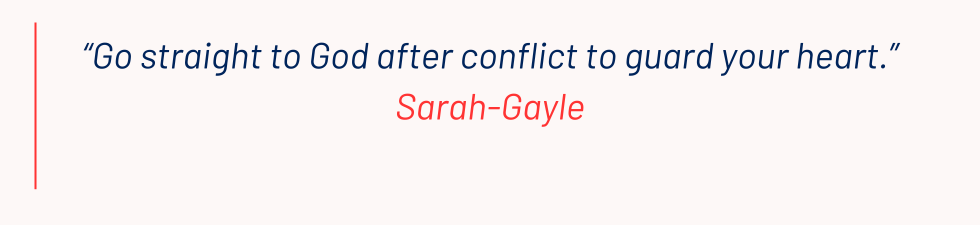
so one of the scriptures that really stands out for me when it comes to resentment is Proverbs 4 23 that says above all else guard your heart for everything flows from it so for me when we have a Argument or just a sensitive conversation that I feel like didn't feel good. It didn't go well I have been getting into the practice of going straight to God right after because I really want him
to search my heart, to show me, Is there anything that is harboring inside of me? And we've talked about this in past podcasts where it talks about not giving the devil a foothold because I don't want any kind of argument or conversation between Chad and I to give the devil a foothold because that's what sows those seeds for resentment to grow.
Chad (01:32)
So we want to look at what are a couple of the things that leads to an environment where resentment can grow. And one of the first things is expectations. Unhealthy expectations are the breeding ground of resentment. Now, big picture, expectations can be a great thing. Under the idea that I have communicated those expectations and Sergei has agreed to those expectations, right? Those become values, those become vision, those become things.
that we're using to support and strengthen our marriage. When I say expectations can be the breeding ground of resentment, I mean the things that I have not shared, but I am still then withdrawing or withholding from Sarah-Gayle, or things where I am disappointed and hurt, and we have never even talked about those. unhealthy expectations can be a breeding ground for resentment.
Sarah-Gayle (02:22)
And another thing that can be a breeding ground for resentment is poor communication and not knowing how. And that's something that we specialize in at Hope Relentless because many couples just don't bring up things. And it's pretty sweet when I hear, it's pretty tender, I'll say, when I hear couples say, well, I don't want to bring it up because I don't want to hurt their feelings. And that just tells me they don't know how.
to communicate in a way that they feel can be respectful and can still be loving as well. So that's something we can learn. We can learn a skill when it comes to communicating and we can also learn what to do when there is not agreement. A lot of times when couples do not agree, We don't know what to do.
And sometimes it reminds me of our childlike nature, not in a good way, but in a way where it's like, it's my ball, it's my ball. And then you just take your ball and go home because someone's not doing exactly what you want to be done. this happens in our communication when we don't have agreement, we don't know how to handle it.
one of the things that we recommend is compromise or a counter. And depending on who you are, those can sound like cuss words because some couples will say, well, I don't want to lose who I am. It's not about losing who you are but it is recognizing that we are merging a life together.
when we decide to say I do, two become one, especially in kingdom marriage, where we are living life together and that requires compromise, requires sacrifice, that requires a counter whereas, okay, well, maybe we don't do this, but what about this? It requires working together with one another.
Chad (03:54)
another area that can create resentment is pride. Pride can show up in a couple of different ways in our communication or interactions with our spouse. One area of pride can be, am not willing to take ownership or admit that I made a mistake. Sometimes we can see this when competitive people get married and they recognize.
that they lost or that they were wrong or that what they shared was inaccurate or incomplete, but they don't want to give the satisfaction to their spouse, right? And so pride can create this environment where we're not taking ownership. And I think about scripture where it says, do nothing out of selfish ambition or vain conceit, but in humility, consider others better than yourself.
I think the reality is humility and we'll talk about that a little bit later is a breeding ground of connection and intimacy and the opposite is pride, right? God literally says he opposes the pride and so we don't want to allow pride to become a common characteristic of our marriage.
Sarah-Gayle (04:54)
And when we're talking about some of the origins of resentment, the last thing that I will mention is a lack of follow through. When we have conversations with each other and one of us thinks, okay, this is clear, this is what we're going to do. But then we find that it doesn't actually happen. And that can create resentment, especially when it's over and over again. And we talk to many couples where it's saying, we go through the same things, we have the same arguments again and again, nothing changes.
And so that can create a hardness in our heart, which is resentment. And we tell couples, you know what, sometimes it's not even malicious that you guys are on this pattern in this cycle. Sometimes it's the details of not talking through, okay, what does this actually look like and where is the accountability to make sure this happens? Because we can go back and forth and say, well, I thought you said you would do this. And then Chad can say, no, I didn't say I would do that. I thought you said you would do this.
But when we take that extra time and have that margin, and we've talked about this in other podcasts as well, to have the conversation and talk about those details, then it's very clear as to what is expected and the follow through can happen.
Chad (06:07)
Sometimes when working with couples they We don't understand the cost of resentment Oftentimes couples make our we're dealing with a little bit of resentment as if like you know It's a little cold outside like it's just this casual thing that we've become custom to yeah, but
Resentment is incredibly expensive. And so I want to take a moment just to talk about some of the cost of resentment. The first thing is if I'm harboring resentment, then likely I put Sarah-Gayle in a box. And so now even as she is growing and moving towards me, I don't see it because resentment shakes my perspective to notice what is still missing. Yeah. You sometimes maybe just on a scale, maybe we are a two or three out of 10.
and we've grown to a five or a six. Well, if I'm harboring resentment, I'm still seeing the gap. And so that's what I am doing. I'm pushing Sarah-Gayle down. I'm putting her in a box. We know in Proverbs, right, there's this principle where as a man or woman thinks, so is he. And so there's this idea that what we were looking for is what we will see more of. And so resentment puts us in a negative perspective about our spouse.
Sarah-Gayle (07:18)
Yeah, it's so good. And another thing that resentment costs us is obedience to Christ. Because when we harbor resentment, we're doing things like withholding. We're being indifferent. We might be cold. We might be rude. Whatever it may be, we're very short with each other. Right? All of the traits that come about when we are resentful and all of those things are sinful.
Those are things that are not honoring to God and that is not living out God's best, what he has for us. And so we're settling and we are experiencing something that we don't have to experience because of the resentment and God has so much more for our marriage.
It puts us out of alignment when it comes to our relationship with God. And as followers of Christ, that is our aim. We want to be obedient to God and what he has called us to, what he's asked us to do. And so when we are harboring that, it's very difficult to be obedient and to honor God.
Chad (08:15)
we want to look at now what, right? If we recognize, wow, we have some of these origins of resentment and we're recognizing the cost, what do we do to reduce them? And so the reality is, I want you to take on this mindset that it is an inside game. So you might be sitting here and be tempted to think, man,
my spouse needs to listen to everything that they're sharing because they really struggle with resentment. The reality is it's easy to recognize our spouse's limitations because we can just kind of blame and move on, right? But it takes a lot of work for that inside game, that personal reflection and that personal ownership. And so I want you to be thinking through these next five things that we share from a personal standpoint first. And so the first one is rely on God. The reality is when we seek God,
It shifts our focus from blaming or criticizing or attacking our spouse as the problem and we look towards God as our source. so relying on God will one, soften my heart and my mind and two, it'll equip me if it's a season where I need to be ready for perseverance. Either way, I'm gonna get that strength and that reliance from God. And so Colossians 3.23 says, and whatever you do, do it heartily as to the Lord and not.
And so we can get this dynamic where I am doing things and then expecting a return from my wife or a return from my spouse. And now we create this transactional relationship. Well, when God is my source, then I am treating my spouse just as God has asked me to treat them, not based on the day-to-day actions of what I determine they deserve. And so this is foundational. If we want to manage resentment effectively,
God needs to be our source because there is no partner. There is no spouse out there that's gonna get it right all the time. And if that's the requirement, then both Sarah-Gayle and I are going to perpetually have justification for resentment. Well, you didn't do this. Well, you didn't do that. And the reality is we're right and our marriage is destroyed. And so there's gotta be something bigger than just being right. And relying on God is the most reliable thing to equal
equip us to manage resentment. And so one of the things that we can do is we can simply ask God to cleanse our heart, to give us an open heart, an open mind. God, help me to see my spouse as you see them. And so this reliance of God causes us to go to our heavenly Father and ask for support and wisdom and patience and the fruit of the Spirit. All of that's gonna help me show up as a better husband.
Sarah-Gayle (10:58)
Yeah, and so I know you said this a couple of times, the managing of resentment, and really we want to eradicate it, right? We want to get rid of resentment altogether, and these are the ways to do that. And so the first one, relying on God. And to do the second one, we need the first one, because it's humility. In our own strength, we're not humble. We want what we want, and it's all about them and blame and all that. But when it comes to humility, Luke 6, 41 through 42 says,
Why do you look at the speck of sawdust in your brother's eye or your spouse's eye and pay no attention to the plank in your own eye? And this isn't meant to condemn us or to say you have no right to feel how you feel. On the contrary, we feel how we feel because we are hurt, right? And so it's not dismissing the pain, but we're trying to get into alignment with what has God called me to do? How has he created me and what has he...
Designed marriage to be because once I get in tune with him, that's when I get to experience his best That's when I get to experience the joy that he has in store for us And so another verse is Romans 3 23. It says all have sinned and fall short of the glory of God So geez, I mean I have sinned so as I continue to just point at Chad and tell him what he's done wrong And I hold it in I harbor it and that resentment grows. It's almost like I'm forgetting
that I have a lot of things that he could be resentful for as well. And also I'm forgetting about what God has done for me. And Chad's gonna talk about that in a moment But the last thing I'll say is Matthew 7.2 says, with the same judgment you pronounce, you will be judged. And with the measure you use, it will be measured to you. And I like this because it keeps me humble.
because I recognize that as soon as I hold Chad to a standard, a very high lofty standard, if I am looking at that as he better do it, and if he doesn't, then I'm justified to harbor that resentment. It's only a matter of time, truly, where I'm going to need grace, and I'm going to want him.
to have compassion in that moment. And when it comes to this verse, it's talking about what we are expecting of him, God's saying, I expect the same of you. And neither of us is going to be perfect every time. we are all sinners and we all fall short.
Chad (13:19)
And so if we want to continue to eliminate and protect our marriage from resentment, the first one is rely on God. The second one is humility. The third one is forgiveness. So the effort as Christians, we need to master forgiveness, right? There's a couple of biblical principles that are important to highlight and they're simple. They're not easy, but they're simple. And it's important that we don't
Sarah-Gayle (13:30)
You said the F word.
Chad (13:47)
Adjust the standard that God has invited us to and the standard that he has already demonstrated himself And so in Colossians chapter 3 it says forgive as the Lord forgave you and so as a Christian the foundation of my relationship of being restored with God is Receiving and experiencing his forgiveness. That's the whole beginning, right? And so if we're gonna continue to follow him that we need to be good at forgiving
others and Matthew 18 verse 21 through 23 said then Peter came to Jesus and asked Lord how many times shall I forgive my brother or sister or that idea how many times should I forgive my spouse for the same thing right I think many of us in our flesh was Jesus had said three three times like you know what I can work that seems reasonable right but that's not what he said
Sarah-Gayle (14:32)
I know, right? ⁓
Chad (14:38)
Peter asked up to seven times, right? Doubled that three, three, you know, more than. And Jesus answered, tell you, not seven times, but 77 times. The idea here was that it was an exponent. It was basically as many times as you need to. in Matthew six, for if you forgive other people when they sin against you, your heavenly father will also forgive you.
But if you do not forgive others their sins, your father will not forgive your sins. These are not small, casual statements about forgiveness. Scripture doesn't paint a picture of like, ⁓ give it a try, maybe it'll work. No, this is like clear representation of maturity. That if I am following and being obedient to the example that Christ said, then forgiveness becomes the standard and the norm.
not sprinkled on here and there where I feel like my wife has earned it. So if we want to protect our marriage from resentment, forgiveness becomes a crucial element of how we live life.
Sarah-Gayle (15:43)
We've talked about in previous podcasts Christ and the church and how marriage is a metaphor for that relationship. And so I think you're starting to see perhaps through the scripture we're using and what we've been discussing that key is at the center because when it comes to something so significant and so personal as resentment.
and why we harbor it, we need a supernatural power. We need a supernatural source to help us along this journey because otherwise we will succumb to what our flesh wants and our flesh wants what our flesh wants.
The next thing when it comes to protecting ourselves from resentment is assuming the best. like we've already said, all of this is an inside game. This isn't something our spouse can do for us. We want to assume the best of our spouse. In Philippians 4, 8, it says, brothers and sisters, whatever is true, whatever is noble, whatever is right, whatever is pure, whatever is lovely, whatever is admirable, if anything is excellent or praiseworthy, think about such things.
I think it'd be interesting to say that verse again, but put your spouse's name in it. So it's almost like whatever is true about Chad, whatever is noble about Chad, whatever is right and so on with your spouse,
when I think on those things, it's allowing me to assume the best because I'm focusing on the good in my spouse. And when an action happens, my interpretation is just, ⁓ that's good. They're growing. They met well. And that really does change the trajectory of the marriage. And it protects my heart from resentment.
The last thing I'll add when it comes to how to guard from resentment or protect ourselves from resentment would be individual counseling. Because when we are operating from a place of hurt and pain that doesn't even necessarily have to deal with our spouse. It really started from our upbringing, our family of origin. And our spouse just kind of exasperates everything because we never really addressed what went on back then.
it makes a big difference because then we're able to have someone who can focus in on us and why we're doing the things we're doing and help us to actually
manage and create strategies to help us to continue to heal and help us to show up in our marriage in a way that is life-giving and in a way that's not being led by our pain and hurt, but really being led by what God has for us, who He's created us to be and what He's called us to do.
One caveat I'll say for individual counseling is to make sure that that counselor is for your marriage and recognizes that you want to stay married and recognize that you are just working on yourself because I've had different clients tell me of their past experiences with individual counselors and sometimes it's more detrimental to the marriage than it should be. And so we want to make sure upfront we're clear with individual counselors.
that we're not talking about the marriage and why our spouse isn't doing what they should be doing. We're talking about ourselves and what are we able to do? What are we able to grow in?
Chad (18:47)
And so what are some next steps? We want to encourage and equip you to protect your marriage from resentment. And so there's a couple clear next steps that you can take. One, when you're thinking about the five things, the five parts of the inside game, did one of them resonate with you? Did one of them stick out as the biggest positive impact that you can take ownership and begin applying? Was it relying on God and exploring what does that look like for you in this season? Was it walking in humility?
Was it actively forgiving something that you've been holding on to? Was it intentionally assuming the best? Or is the next step for you going and getting individual counseling? One of the questions that couples may ask is, how do we know we need couples counseling? How do we know we need counseling to begin with? I would say, if you make a goal to take any of these actions and you're not able to, it's a sign that you would benefit from additional support
Encouragement and accountability. Yeah, so a practical next step could be hey chance again We're trying to do these things but for some reason we're not able to well Reach out for couples counseling, right? That could be a practical next step that is coming alongside you and Supporting you in this season, but pick an action item and begin making progress
Sarah-Gayle (20:08)
Yeah, and so like Chad said, we have the five areas which are focusing on the inside game and that's relying on God, walking in humility, forgiving, assuming the best, and individual counseling. And then we ultimately have couples counseling because if we're not doing the inside game, when we get to couples counseling,
we're not gonna be able to receive because we're gonna be too focused on what we're harboring and what we deserve and what we're owed. And so we wanna make sure we take that inside game seriously on those five areas. But then with couples counseling, that's important because we wanna make sure we're reworking some of these patterns. We're identifying the areas where you guys are disconnected and we're working together as a team through those areas. Resentment is something that destroys, it steals from our marriage.
And we don't have to exist with it present. And we don't want to. We want to eradicate resentment. God has so much more for us than to hold onto resentment because we know, those of us who have a history of holding onto resentment, that it really does destroy us when it comes to our health, when it comes to our just general wellbeing. And so we know that shows that's not ours to carry. So I want to encourage you as you listen to this podcast, maybe re-listen to this podcast, hopefully with your
spouse and share this podcast with other people because I'm telling you in our sessions, this is something that is so consistent that comes up with so many couples and it can block the work of reconciliation and of progress and of growth. So let's get rid of it. It's not ours to have in the first place and let's experience all that God has for our marriages.