
How Leading Yourself Grows Your Marriage

Most couples come to coaching quietly hoping for the same thing: that we will side with them, intercept their spouse, and finally get the other person to change.
We have been there. We know that pull, the deep conviction that the solution is our spouse growing up. But over and over, we watch the real breakthrough show up somewhere else entirely. It shows up on the other side of self-leadership.
Two whole people make the best marriages. So before you work on your marriage, it helps to work on the one person you can actually lead. You.
Prefer to listen? Press play and take this one personally, in the best way.
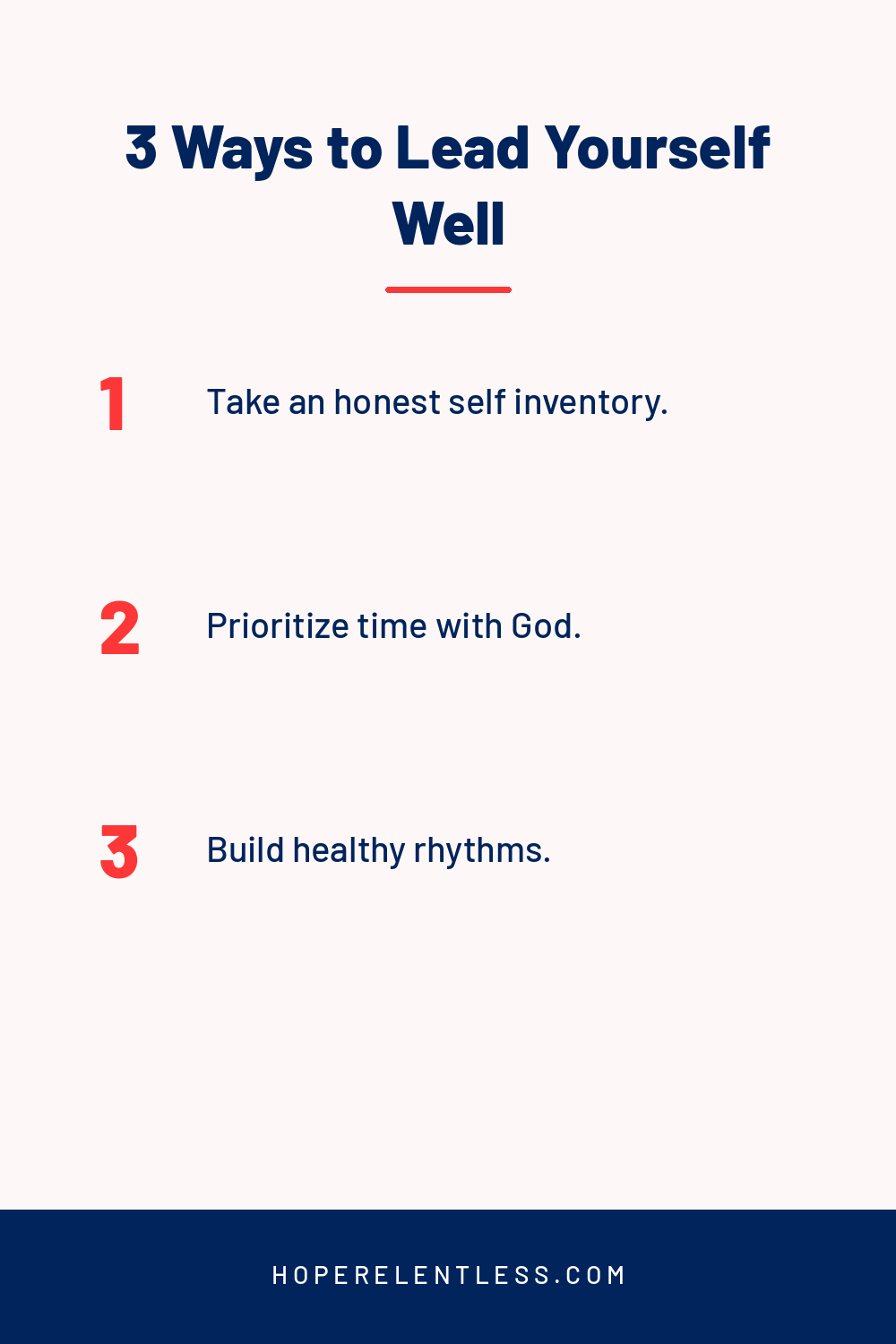
In this episode, Sarah-Gayle and I talk about why leading yourself is one of the biggest levers on the health of your marriage. As John Maxwell says, the first person you lead is you. We get honest about reacting versus responding, and we walk through three practical ways to lead yourself well: an honest self inventory, prioritizing time with God, and building healthy rhythms.
This is not about self-improvement for its own sake. As I get healthier, I show up as a better husband. As Sarah-Gayle invests in herself, she shows up as a better wife. The marriage benefits from the strength.
Key Takeaways
- You can only lead yourself. The first person you lead is you. Take the plank out of your own eye before you reach for your spouse's.
- Respond, do not react. When you operate from strength, you can acknowledge what your spouse shared instead of throwing gas on the fire.
- Take an honest self inventory. Rate your self-satisfaction one to ten, the person you are now and the person you are becoming, and ask what would move it up a point or two.
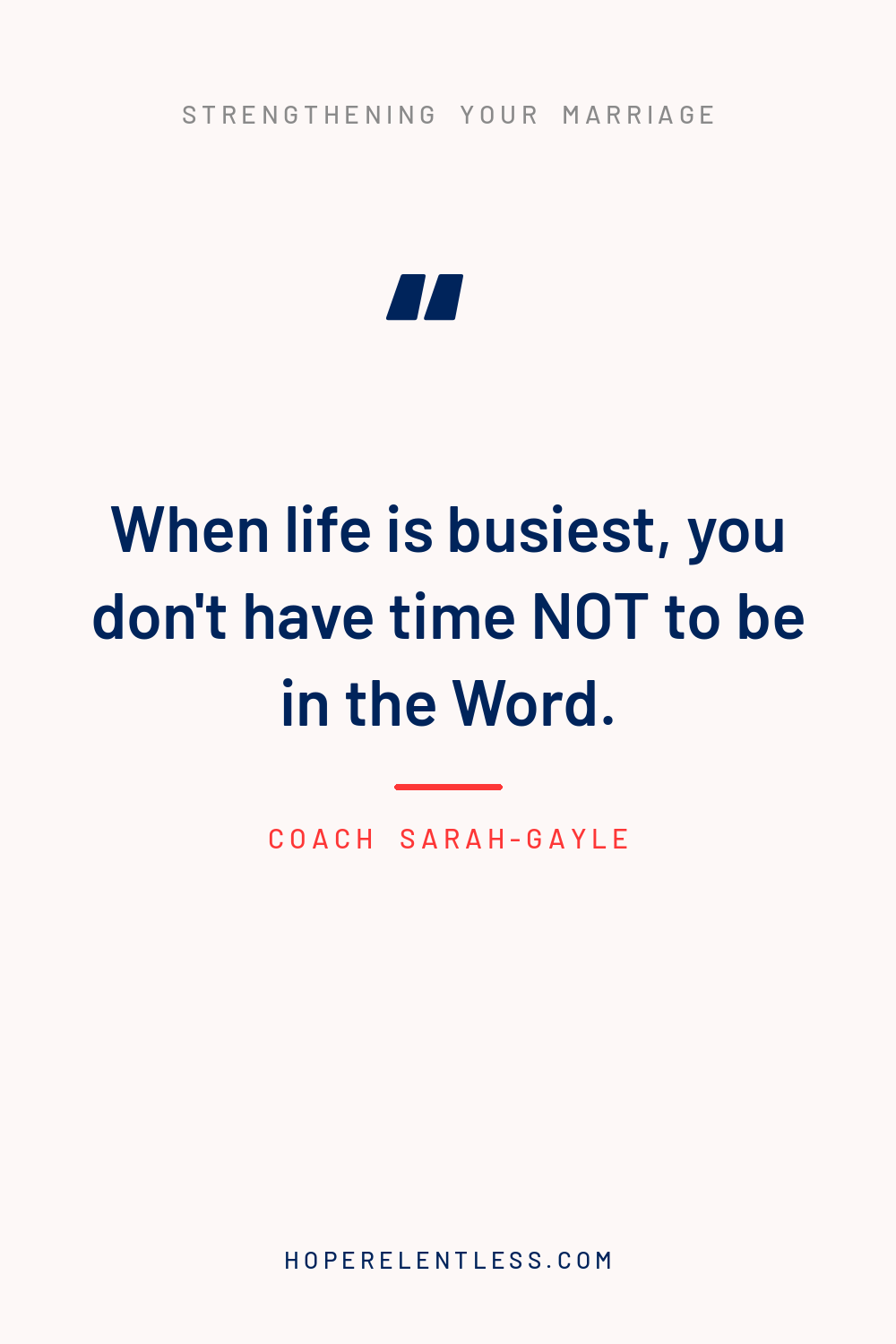
- Prioritize time with God. When life is busiest is exactly when you do not have time not to be in the Word.
- Build rhythms, not a packed calendar. An empty slot does not mean you have the energy to fill it. Manage energy so you have something left for what matters.
- Lead first, then invite support. Do not hand your growth to your spouse. Take ownership, then invite them to speak into it.
The breakthrough is not your spouse changing
So often couples come in hoping one of us will intercept their spouse and break through to them. We get it. We have been fully convinced the solution was the other person changing. But we see, over and over, that the breakthrough is on the other side of self-leadership. People will literally say, we just want to know who is right. And honestly, even if you win that moment, you are not growing the marriage. The better question is, am I trying to win this battle, or am I recognizing we are a team and doing whatever it takes to grow the marriage? Sometimes that means not winning the argument.
How we grow personally pours out into the marriage. Two whole people make the best marriages. John Maxwell says the first person you lead is you. Sarah-Gayle has been honest that she has tried to lead me before leading herself, and Scripture is clear, take the plank out of your own eye first. It is so easy to point at someone else and bypass the work we could be doing as we look inward.

Respond from strength instead of reacting
For me, leading myself is tied to a mindset we teach: communication is about connection. This is still hard when I get into a reactive state. When I am healthier, operating from a place of strength, I can respond to what Sarah-Gayle shares instead of react to it. When I react, my tone gets louder, argumentative, condescending. I am trying to win, and it sends us down a completely different path. When I respond, I can acknowledge what she shared, and the temperature and pace of the conversation actually support connection.
This is why individual health matters so much. I have to own that I am capable of not reacting, regardless of what she does. Just because she said something does not mean I have to throw gas on the fire. I am in control of my own emotional state, even in a hard conversation. That is self-leadership. If you want more on responding instead of reacting in the heat of a moment, we go deeper in the power of repair after a fight.
Three ways to lead yourself well
1. Take an honest self inventory
One thing Sarah-Gayle asks couples is, on a scale of one to ten, what is your self-satisfaction? She lets them score it two ways, the person you are now, and the person you are becoming, because a lot of us have growth already in the works. We worked with a highly successful doctor who scored himself a two or three out of ten. He had everything on paper that should create confidence, and he was a two. That does not just go away on its own, and it is hard to enjoy anything, including your marriage, when your self-satisfaction is that low.
The point of the inventory is honesty. We are getting rid of pride, not setting an appearance. Like the psalmist, search me and see if there is any offensive way in me. When we are an open book before God, He shows us, and then our growth happens with authenticity. A practical version I love comes from the business world: at the end of the day, would you keep yourself on staff, or fire yourself? Look objectively. Then ask, what would move my number up one or two points? Trying to leap from a two to a ten feels impossible and makes us quit. A one or two point gain gives momentum.
2. Prioritize time with God
When we are busy, high-capacity people, the first thing to go is usually our time with the Lord. But the essence of what I have heard for years is this: when we are at capacity, we do not have time not to be in the Word. We need that wisdom most in the busiest seasons, because that is when we get reactive, and reactive is rarely God's best. Here is why the inventory comes first. When we have a little more clarity about where we are trying to grow, we can read and study the specific promises of God that speak to that area, not just the gurus. Then our prayer and our Bible reading line up with what God wants to do in and through us.
3. Build healthy rhythms
This looks different for different personalities. I tend to create structure, and the story I tell myself is that I thrive on it. When I feel overwhelmed with no clear path, that is when I cope, mindlessly scrolling or watching TV, and my screen time gets out of hand. With more structure, this is when I work out, this is when I read, I am supported. Even if you are less structured, build rhythms around the important things: your marriage, quality time together, time in God's Word, taking care of your body.
Here is a key piece on time management: just because there is an empty space on your calendar does not mean you have the energy to execute whatever you put there. The whole calendar should not be full. We have all had a date night arrive when we are too exhausted to enjoy it. That is a signal that other areas need to be managed better, so that when we get to what matters, we have the energy for it. Set little goals and little wins. Write them down. Sarah-Gayle talks about deciding to drink more water and forgetting by 11am, until she put a sticky note where she works. We make our plans, but the Lord directs our steps. Keep your goals on paper, and when new opportunities come, check whether they actually align before you say yes.
One caution: lead yourself, do not lean codependently
Because we work with so many couples, we have to name this. Codependency can creep into all of it. So when it comes to your marriage, do not start by asking your spouse, what do you think I should do? The whole point of self-leadership is that you identify it first. Take some ownership, then invite your spouse to speak into it as a supplement, not the source. Then share with each other what support could look like. Here is how I could benefit from support. That way you are both taking ownership and supporting each other along the journey.
Want an honest read on where you actually are?
Self-leadership starts with a clear picture. Take the free Marriage Assessment to see where your marriage is strong and where it is drifting, so your growth has a real starting point instead of a guess.
Take the Free Marriage AssessmentKey Scriptures on leading yourself
Your Next Step
Do the inventory this week. On a scale of one to ten, rate your self-satisfaction twice: the person you are now, and the person you are becoming. Then ask the one question that creates momentum: what would move my number up one or two points? Pick one small, reasonable action and put it on the calendar. Then invite your spouse to support it, after you have owned it.
Reflection Questions for the Two of You
- Where am I currently hoping my spouse changes when the real work is mine to do?
- What does it look like when I react versus when I respond? What usually triggers the shift?
- On a scale of one to ten, where is my self-satisfaction now, and where is it becoming?
- What is one rhythm, with God, my body, or my time, that I have been neglecting?
- How could I benefit from your support as I work on this, without handing it to you?
Save this for later

Growth starts with you, and you do not have to do it alone
If you are ready to lead yourself well and watch it pour into your marriage, let's talk. One conversation. 30 minutes. You'll know if it's a fit.
Schedule a Free ConsultationCheering you on,
- Chad & Sarah-Gayle
There's always, always hope.
Sarah-Gayle Galbreath holds a Master's in Marriage & Family Therapy and co-leads Hope Relentless, coaching Christian couples in communication and connection.
Chad Galbreath is an ordained minister and co-founder of Hope Relentless. He and Sarah-Gayle have been married over 20 years and have coached couples since 2010.
Read the full episode transcript
Chad: Hello, my name is Chad and this is my beautiful wife, Sarah-Gayle. Today we are talking about one of the biggest impacts on the health of your marriage, learning how to lead yourself. So often, couples think they will get breakthrough because their spouse is going to change. They come into coaching hoping one of us sides with them and breaks through to their spouse.
Sarah-Gayle: Can intercept for them, right.
Chad: Yes, and gets them to listen. We have been there. We know that temptation, fully convinced the solution is our spouse changing and growing. But we see, over and over, the breakthrough that is on the other side of self-leadership. A couple of things equip us as individuals to grow and be more whole and healthy, and that strength has a ripple effect into our marriages and every other area of life.
Sarah-Gayle: When you talk about that intercessor, I think of so many sessions where people say, we just want to know who is right. You want that satisfaction. We joke, let's replay the recording. But if you win a moment, ultimately you are not growing the marriage. Am I trying to win this battle, or recognizing we are a team and want to do whatever it takes to grow the marriage? Sometimes that means not winning that particular argument. How we grow personally pours out into the marriage. Two whole people make the best marriages. John Maxwell says the first person you lead is you. I have been guilty of trying to lead him before leading myself. Scripture says take the plank out of your own eye first, because it is easy to point at someone else and bypass the work we can do as we look inward.
Chad: I read a ton of Maxwell in college. For me, leading myself ties to a mindset we teach, communication is about connection. This is still hard when I get into a reactive state. When I am healthier, operating from strength, I respond to what Sarah-Gayle shares instead of react. When I react, it gets louder, my tone gets argumentative, condescending, I am trying to win, and it puts us on a different path. When we react to each other, the conversation is usually hurtful, frustrating, disconnected. When we respond, one of the most powerful things is acknowledging what each other shared, and the temperature and pace support connection. I need to own that I am capable of not reacting, regardless of what she does. I am in control of my own emotional state, even in difficult conversations.
Sarah-Gayle: There are a couple of steps to get to a place where we are proactive and able to regulate before reacting. It requires thoughtfulness and intentionality. A lot of times we bypass the work on ourselves, the self-care and self-leadership, because we have so much to do. Moms, business owners, ministry leaders. We tell ourselves we do not have time to stop and assess and reflect. But if we do not, we keep doing the same things. One business leader said, at the end of every day, look at how you did and decide if you would fire yourself or keep yourself. That is self-reflection. Would I keep me on staff as the CEO of my life, based on today?
Chad: There are so many journals and tools trying to get us to be aware of our own health. If you have no system to check in, one of my favorite questions is, how are you doing, really? When we work with leaders, faith-based or for-profit, we can sacrifice our individual health at the altar of the organization we are leading. In the short term we get rewarded for it. But the question is whether that growth is sustainable. I heard that the biggest risk to a small business is the health of the leader, if they run out of passion, energy, or vision. A lot of our work comes back to the organization of the marriage and family, and our individual health is the biggest opportunity and the biggest risk. So part of our encouragement is, prioritize your individual health. As I invest in myself, I show up as a better husband. As Sarah-Gayle invests in herself, she shows up as a better wife. The marriage benefits from that strength.
Sarah-Gayle: You matter. So we will transition into ways to lead yourself. One is the self inventory. With couples, we ask, on a scale of one to ten, what is your self-satisfaction? I let them score two ways, the person you are now, and the person you are becoming, because a lot of us have changes in the works. I remember a highly successful doctor who scored himself about a two or three out of ten.
Chad: Yeah, a two or three out of ten.
Sarah-Gayle: He had everything on paper, but he was a two. We say, let's look at that with urgency, because it does not just go away, and it is hard to enjoy anything, including marriage, when self-satisfaction is that low. I think of the scripture that God blesses and adds no sorrow to it. When we take inventory, we are honest and getting rid of pride. We are an open book. Lord, search my heart, see if there is any offensive way in me. When we do that, He shows us, and then we grow with authenticity. When we hide and pretend, sometimes we are blessed, but there is sorrow added, because we have neglected our marriage or our children while grinding.
Chad: A specific action item: reflect on that question, what is your current personal satisfaction, one to ten? Distinguish where you are from where you are becoming if you already have things in place. Then ask, what would move it up one or two points? That gives momentum. Trying to jump from a two to a ten makes us give up. Here is why this matters, because the next thing is prioritizing time with God, prayer, and His Word. When we have more clarity, we can study the parts of God's promises that speak directly to the area we are trying to grow in, not just the gurus, but God's word, so our prayer and reading line up with what God wants to do in us.
Sarah-Gayle: When we are busy and high capacity, one of the first things to go is our time with the Lord. But the essence of what I have heard is, when we are at capacity, we do not have time not to be in the Word, not to be prayerful, because we need that wisdom in a busy time. When we feel stretched, we become reactive, and reactive is typically not God's best.
Chad: The third part is building healthy rhythms. For some personalities this looks different. I am more structured, or I look to create structure, and I tell myself I thrive on it. When I am overwhelmed without a clear path, that is when I cope, social media or TV, and my screen time gets out of hand. With structure, this is when I work out, this is when I read, that supports me. Even if you are less structured, build rhythms around the important things, your marriage, quality time, God's Word, your physical body. One thing I share: just because there is empty space on the calendar does not mean I have the energy to execute it. The whole calendar should not be full. Sometimes date night comes and we are exhausted. That signals other areas need to be managed better, so that when we get to what matters, we have energy for it. If you do not, take it to prayer and ask God for wisdom about where you are taking on things outside of what He has for you.
Sarah-Gayle: When we do not create rhythms, we can feel in debt to our time, like it is insurmountable. This is where goals come in. Once you have gone to God in prayer and have that self inventory of what matters, set goals with timing and little wins, because trying to go from a two to a ten is discouraging. Write the goals down, it keeps them top of mind. I might decide to drink seven glasses of water and forget by 11am, but a sticky note in front of me keeps me on target. Keep your goals on paper, and when opportunities come up, check whether they align. We make our plans, but the Lord directs our steps.
Chad: On a practical level, because we work with so many couples, codependency can creep into this. The whole focus is, you matter, and investing in yourself is one of the greatest returns for you, your marriage, your family, your business. Start with the self-assessment, let it guide action items. And when it comes to your marriage, do not ask your spouse, what do you think I should do? Self-leadership is identifying it yourself, taking ownership, then inviting your spouse to speak into it as a supplement. Then share what support could look like. Here is how I could benefit from support. That way you take ownership and support each other along the journey.
Sarah-Gayle: You make a great team. We want you to grow together as you grow individually. You are fearfully and wonderfully made. God made you on purpose, for purpose. As we lean into Him and take that self inventory, and put healthy rhythms in place, we will see the marriage God has for us, one that brings blessing and adds no sorrow to it, because we are connected and rooted. We are cheering you on.