
Two days instead of twelve weeks
Marriage Intensives
Two days. Both of us in the room with both of you. You walk in with the conversation you have been circling for months, and you walk out with the tools, an agreement, and a written plan for the next 90 days.
One conversation. 30 minutes. You'll know if it's a fit.
What's on this page
Is a Marriage Intensive the Right Fit?
You go to bed on opposite sides of the bed again. Not fighting. Just far. That distance is usually the first thing couples name when they call us.
Here's what I hear most before a couple books. We've talked about getting help for a year. We can't find twelve Tuesdays. And every time we finally sit down to talk about the real thing, one of us has to leave for practice. So the conversation never finishes. It just gets put back on the shelf.
An intensive solves for pace. Instead of fifty-five minutes a week stretched across three months, you get two full days where nothing is going to interrupt you.
It tends to fit couples who say things like this
- We say "we're fine" to everybody but each other.
- The same argument comes back every few weeks and never actually closes.
- We feel more like roommates than teammates.
- We looked at a twelve week program and knew our calendar would eat it alive.
- There's one specific conversation we've been avoiding, and we need help finishing it.
- We'd rather clear two days than protect twelve Tuesday nights.
None of that means your marriage is broken beyond repair. It usually means you're both tired, you've run out of new things to try, and you want somebody in the room who has helped thousands of couples finish the conversation you keep starting.
What Couples Say
The most common thing we hear after two days is some version of "we should've done this sooner." That isn't a sales line. It's just what couples say once they stop waiting.
What Two Days Actually Looks Like
Both of you are in the room the entire time. No separate sessions, no one spouse sitting in the hallway wondering what's being said about them, and no private meetings before or after. That isn't a scheduling preference. We work with couples only, and every service we run has both spouses present, every single time.
Both of us are in the room too. A husband and wife team coaching a husband and wife. Sarah-Gayle catches things I miss, I catch things she misses, and neither of you ends up feeling outnumbered.
We build the tools first, then we use them on the hard thing. That order matters. Most couples don't need a referee for one fight. They need a way to have the next two hundred conversations without them turning hurtful.
Day One: Get honest, then get equipped
What's actually going on
You both complete our marriage assessment before you arrive, so we open on real information instead of small talk. We walk through what it surfaced together. No grading, no verdict, just the honest picture on the table inside the first hour.
Then each of you writes down two unhealthy and two healthy communication patterns that you bring. Not your spouse's. Yours. You share them with each other while we sit with you. For a lot of couples this is the moment something shifts, because humility meets humility and the room stops being me versus you.
We close the morning on the mindsets underneath all of it: personal responsibility, same team, and the simple math that every interaction is either a deposit or a withdrawal.
The first half of the Communication Loop
The Communication Loop is our four step process for having a hard conversation without it turning into a fight. The afternoon covers the first two steps.
Proactive Start. How you open a conversation largely decides where it ends up. You learn to trade the accusation for an I-statement with a positive target: when this happens, I feel this, moving forward I'd appreciate this.
Validating Response. The listener's job, and the one most couples were never taught. Listen to understand, reflect back what you heard, then confirm and validate. Validation isn't agreement. It's your spouse feeling heard.
Then you practice both, out loud, on a real topic. On purpose we don't start with the hardest one. You learn to hold the baton before you run the hard leg.
Day Two: Bring the hard thing, then build the plan
The conversation you've been circling
This is the morning you came for. The topic you've been putting back on the shelf for months goes on the table, and you work it with the tools you built yesterday.
Solution-Based Agreement. Once you both feel heard, you make a positive request, your spouse accepts or counters while staying solution-based, and you land on something that serves you both. We keep you in both/and instead of either/or, because either/or makes opponents.
Discuss the Details. This is where most couples fall down. They agree, the week goes by, nothing happens, and resentment fills the gap. So we get specific: who, what, when, where, and how. Clarity, not control.
We're right there the whole time. When it slips, we slow it down and back you up.
What you do when you blow it, and what you do next
The Repair Roadmap. You'll blow it. Every couple does. Healthy couples aren't the ones who never argue, they're the ones who take responsibility for how they argue and how fast they come back together. You learn our five step repair: proactive, humble ownership, reassurance, apology, forgiveness.
The Game Plan. The Loop is what happens inside a conversation. The Game Plan is what you set before one: the goal, the timing, one topic at a time, where these talks go best, and who supports your marriage.
Your 90 day plan. Written down before you walk out. Not homework to interpret on your own. Specific next steps, on your calendar, with your first follow-up already booked.
Each day runs about six hours with breaks built in, and lunch is handled. We set the exact start and end times with you when you book, so the two days fit around work, childcare, and how far you're traveling. Two people can only absorb so much in one sitting, and nobody thinks clearly on an empty stomach.
What's Included, and What Happens After
The loudest objection we hear about getting help isn't the price. It's this: we tried something before, it worked for a few weeks, and then it faded. So we built the after into the offer instead of selling it back to you later.
Before the two days
- Our marriage assessment, completed by both of you
- Scheduling built around your calendar, not ours
The two days
- Two full days, about six hours each
- Both Chad and Sarah-Gayle in the room, both days
- Both spouses present the entire time
- Lunch and refreshments both days
- Your written 90 day plan before you leave
The 90 days after
- Three follow-up sessions across the next 90 days
- Text message encouragement between follow-ups
- The same tools, revisited when real life tests them
Here's why the follow-ups matter more than the two days do. Anybody can have a good weekend. The question is what happens the first Tuesday something goes sideways and you have to actually use a Proactive Start when you'd rather be right. That's what the 90 days are for.
Intensive or the 12-Week Program?
Neither one is more serious than the other. It isn't weekly for the mild cases and intensive for the desperate ones. It comes down to your clock.
The 12-week program fits you if
- You can protect a weekly rhythm and want to build habits one week at a time
- You want repetition, and a coach walking with you while you practice at home
- Spreading the investment across three months works better for you
- You want the full connection track, week by week
The intensive fits you if
- Twelve weeks of appointments isn't going to survive your calendar
- You're exhausted by waiting a week between conversations
- You want both of us, together, working the same material
- You'd rather clear two days once than reschedule twelve times
Both formats cover the same ground: communication, conflict, repair, and connection. Both use the same frameworks. The intensive compresses the timeline and puts both coaches in the room. The twelve week program stretches it out and builds the habit through repetition. You can read the weekly format in full on our marriage counseling page.
When an Intensive Isn't the Right Next Step
Not every marriage needs two days like this, and I'd rather say that now than have you clear your calendar for something we can't give you.
If there's active abuse, addiction that hasn't been addressed, or a safety concern in your home, an intensive isn't the right starting point. Those situations need immediate, focused help first, often from a crisis resource. We're coaches, not licensed therapists, and two concentrated days are not built to hold a crisis in progress.
- There's an active safety concern in the home right now.
- One spouse is completely unwilling to participate. Every service we offer involves both of you.
- One of you is looking for help ending the marriage rather than working on it.
- Something urgent is happening and you need more frequent touchpoints, not fewer. In that case a weekly rhythm serves you better than two days and a gap.
A hesitant spouse is a different thing than an unwilling one. Hesitation is normal, it's common, and it's worth talking through on a consultation before you decide anything. A spouse who shows up hesitant is usually not against the marriage. They're against being ambushed.
Worth asking anywhere
Four Questions to Ask Before You Book an Intensive
Intensives vary enormously between practices, and the differences are hard to see from a website. These four questions surface most of them, and you should ask us too.
Are both spouses in the room the whole time?
Some formats split you up for parts of it. Ours doesn't, ever. Nothing gets said about you that isn't said in front of you, and that's a large part of why couples feel safe enough to be honest.
Who is actually coaching, and for how much of it?
Ask whether the person whose name is on the website is in the room, and whether they're there for all of it or for an opening hour. Both of us are there both days, start to finish.
What happens after it ends?
Ask whether follow-up is included or sold separately. A good weekend that fades in three weeks is the most common disappointment couples bring us from somewhere else.
What framework are we being taught?
Ask what you'll actually be able to do on the drive home that you couldn't do on the drive in, and whether you leave with it in writing. Insight is not a skill.
A program worth your money should have a clean answer to all four.
Where an Intensive Happens
Intensives are held in person at our Arizona office. It's a private room, not a conference hall. Comfortable seating, natural light, a door that closes, and enough quiet that you can say the hard thing out loud without wondering who can hear it.
Couples travel in for this regularly, and some stay the night between the two days rather than making the drive twice. If you're coming from a distance, ask us on the consultation and we'll point you to a few places nearby. You can find the address and directions on our locations page.
We do run the intensive online by request. In person is what we recommend when it's possible, because two days in a room together does something a screen doesn't. If travel isn't realistic for you, say so on the call and we'll talk honestly about whether the online version or a weekly rhythm through online marriage counseling would serve you better.
Who You'd Be Working With
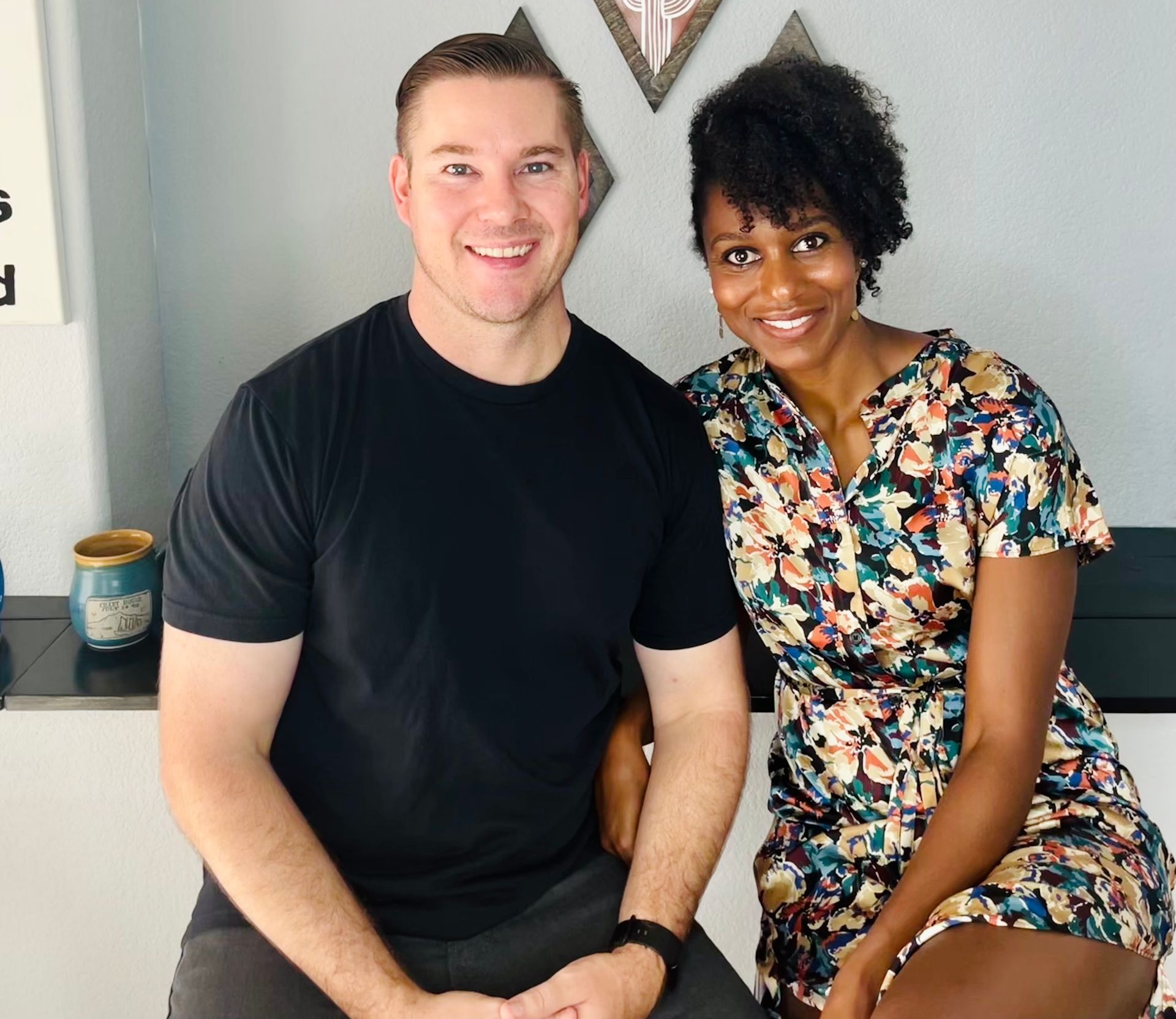
Every intensive is led by the two of us together. You aren't handed off to a coach you've never met, and you aren't working with one person trying to hold both sides of a marriage.
Chad Galbreath
Co-founder, ordained minister
I spent about ten years as an executive pastor before Sarah-Gayle and I built Hope Relentless. I used to fight to be right. My wife jokes that I should've been an attorney. I'd win the argument and lose the connection every time. The shift wasn't a better comeback. It was realizing we were on the same team.
Sarah-Gayle Galbreath
Co-founder, marriage coach
Sarah-Gayle holds a Master of Arts in Clinical Psychology with an emphasis in Marriage and Family Therapy from Azusa Pacific University, and she works here as a coach rather than a clinician. She hears what's underneath what a couple is saying, and she's the reason our frameworks are as practical as they are.
We've been married since 2005 and have coached couples since 2010. Hope Relentless is a coaching practice, not a clinical one. We are coaches, not licensed therapists, and we do not provide therapy, diagnosis, or treatment. If your situation calls for licensed clinical care, we'll tell you and help you find it.
How this starts
Schedule a consultation
Thirty minutes, no cost and no obligation. We ask what's been going on, you ask us anything you want.
We confirm fit and set your days
If an intensive is right for you, we pick your two days on that call. If something else would serve you better, we say so.
Complete the assessment
Both of you fill it out before you come, so day one opens on real information instead of small talk.
Every program price is listed on our pricing page, and we confirm what fits on that call before you commit to anything.
Frequently Asked Questions
What happens during a marriage intensive?
Two days, about six hours each, and we set the exact start and end times with you when you book. Day one covers your assessment debrief, the communication patterns each of you personally brings, the mindsets underneath them, and the first two steps of the Communication Loop practiced on a real topic. Day two brings the hard conversation you've been circling and works it with the last two Loop steps, then covers the Repair Roadmap, the Game Plan, and your written 90 day plan. Breaks and lunch are built into both days.
Do you ever meet with us separately?
No. Both spouses are in the room for every minute of it, and there are no private intake calls beforehand or debriefs afterward. We work with couples only, and every service we run has both spouses present. Nothing gets said about you that isn't said in front of you, which is a large part of why couples feel safe enough to be honest.
What happens after the two days end?
You leave with a written 90 day plan and your first follow-up already scheduled. Three follow-up sessions are included across the 90 days that follow, along with text message encouragement in between. That structure exists because the most common thing couples tell us about past attempts is that it worked for a few weeks and then faded. The follow-ups are what keep the progress from fading once regular life picks back up.
Should we do the intensive or the 12-week program?
It comes down to your calendar, not the severity of your situation. The twelve week program fits couples who can protect a weekly rhythm and want to build habits through repetition. The intensive fits couples whose schedule won't hold twelve weeks of appointments, or who are worn out from waiting a week between conversations. Both cover the same ground and use the same frameworks. We'll tell you honestly on the consultation which one we'd put you in.
What does a marriage intensive cost?
It's a single investment for the couple, not per person, and a payment plan is available. It covers the assessment, two full days with both of us, lunch and refreshments, your written 90 day plan, three follow-up sessions across the next 90 days, and text encouragement between them. Every program price is listed on our pricing page, including the payment plan, and we confirm which format fits on the consultation. There's no insurance involved either way. Coaching is private pay.
Are you licensed therapists?
No. Hope Relentless is a coaching practice. We don't diagnose, we don't treat mental health conditions, and we don't provide therapy. Sarah-Gayle holds a Master of Arts in Clinical Psychology with an emphasis in Marriage and Family Therapy and works here as a coach rather than a clinician, and Chad is an ordained minister. If your situation calls for licensed clinical care, we'll tell you and help you find it.
Can we fit two days around work and kids?
That's the main reason couples choose this format. Instead of protecting twelve weeknights around work and sports seasons, you clear two days once. You still have to plan childcare and time off, but it's one block on the calendar instead of a whole season of interruptions. We schedule around your availability, including weekends.
What if my spouse is hesitant?
Hesitation is common and it isn't the same as refusal. A hesitant spouse is usually not against the marriage. The worry is walking into a setup where one of you gets told everything you're doing wrong. That isn't what this is. If your spouse is hesitant but willing, bring that to the consultation and we'll talk it through. If one spouse is completely unwilling to participate, an intensive isn't the right tool, because every part of it involves both of you.
What's the next step?
Schedule a consultation. It's 30 minutes, no cost and no obligation, and nobody signs anything on it. We ask what's been going on, you ask us anything, and we tell you honestly whether an intensive is the right fit or whether something else would serve you better. If it is a fit, we set your two days right there and send you the assessment to complete before you come. You can book online any time.
Two Days Could Change the Next Twenty Years
Start with a 30-minute conversation. We'll tell you honestly whether an intensive is your next step, and if it isn't, we'll tell you what is.
Schedule a Free ConsultationBoth partners, every session · no cost, no obligation
Cheering you on,
Chad & Sarah-Gayle
There's always, always hope.